
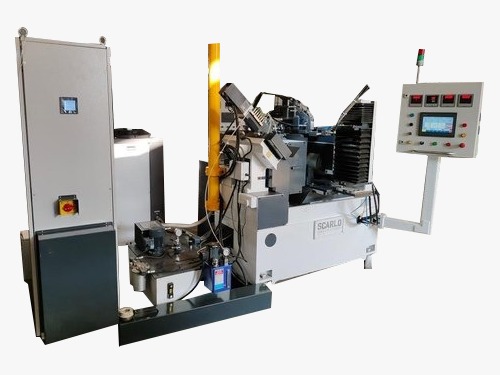
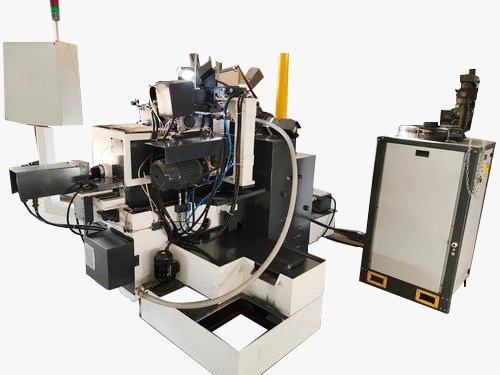
Centerless Grinding Machine Manufacturer

Centerless Grinding Machine Manufacturer
In modern manufacturing, precision finishing plays a critical role in determining product quality, dimensional accuracy, and overall performance. A centerless grinding machine manufacturer develops systems that enable high-precision surface finishing without the need for centering fixtures. This approach supports continuous grinding operations, making it highly suitable for high-volume production environments where consistency and efficiency are essential.
Centerless grinding technology has advanced significantly over time, with improvements in machine design, automation, and control systems. Manufacturers in this field are expected to deliver machines that maintain tight tolerances, enhance productivity, and adapt to a wide range of industrial applications. The focus remains on reliability, repeatability, and long-term operational stability.
Understanding Centerless Grinding Technology
Centerless grinding is a machining process that removes material from the outer surface of a workpiece without requiring it to be fixed between centers. Instead, the workpiece is supported by a regulating wheel and a grinding wheel, along with a work-rest blade that stabilizes the process.
This method enables continuous feeding of components, making it highly efficient for mass production. Eliminating the need for centering reduces setup complexity and cycle time, which is a significant advantage in industrial environments.
The process is widely used for cylindrical components that require high levels of surface finish and dimensional accuracy.
Core Machine Design and Engineering Principles
A centerless grinding machine manufacturer focuses on robust mechanical design combined with precision engineering. The machine structure is typically built to provide high rigidity, which is essential for maintaining accuracy during high-speed operations. Hydrodynamic spindle bearings are commonly used to support smooth rotation, reduce vibration, and enhance overall grinding performance.
The design also aims to optimize stock removal while maintaining roundness and surface finish. Advanced spindle configurations, including twin grip and cantilevered designs, improve stability and accommodate different grinding requirements. These engineering principles ensure consistent output across varying production conditions.
Key Components of Centerless Grinding Machines
A well-designed centerless grinding machine integrates several critical components that work together to achieve precision grinding. Each component plays a defined role in maintaining process efficiency and product quality.
- Grinding wheel for material removal and surface finishing
- Regulating wheel to control workpiece rotation and feed rate
- Work-rest blade to support and position the component
- Spindle system designed for stability and precision
- Dressing mechanism for maintaining wheel accuracy
- Control system for process monitoring and adjustments
Process Flow and Working Mechanism
The working principle of a centerless grinding machine is based on controlled rotation and precise material removal. The process maintains a balance between speed, pressure, and alignment to achieve the desired output.
- The workpiece is placed on a work-rest blade between two wheels
- The regulating wheel rotates the component at a controlled speed
- The grinding wheel removes material from the surface
- Continuous feeding enables high production efficiency
- The process ensures uniform diameter and a smooth surface finish
Industrial Applications Across Sectors
Centerless grinding machines are widely used across industries that require precision components. Their ability to handle different materials while maintaining consistency makes them a preferred choice in manufacturing.
- Automotive components such as shafts, pins, and valves
- Bearing and roller manufacturing
- Aerospace precision parts
- Medical components requiring high accuracy
- Fasteners and industrial hardware
- Hydraulic and pneumatic components
Automation and Modern Advancements
With the integration of automation technologies, centerless grinding machines have become more efficient and adaptable. Manufacturers now incorporate servo-controlled systems, embedded electronics, and programmable interfaces to improve machine performance.
Automation enables precise control over grinding parameters, reduces human error, and enhances repeatability. Features such as automatic feeding systems, conveyor integration, and pick-and-place mechanisms support seamless operation within production lines. These advancements contribute to higher output, reduced downtime, and improved process reliability.
Manufacturing Capabilities and In-House Production
A centerless grinding machine manufacturer with in-house production capabilities ensures better quality control and consistency. By managing key manufacturing processes internally, such as machining, assembly, and testing, manufacturers can maintain strict quality standards.
In-house facilities typically include advanced machining systems such as CNC turning, milling, boring, and grinding machines. Precision assembly is carried out by skilled technicians to ensure each component meets defined specifications. This integrated approach enhances the reliability and durability of the final machine.
Importance of Precision and Repeatability
Precision and repeatability are critical performance factors in centerless grinding operations. Manufacturers focus on achieving tight tolerances and consistent results across multiple production cycles, especially in industries where even minor variations can impact performance.
Machine design, spindle stability, and control systems all contribute to maintaining accuracy. Regular maintenance and proper calibration further ensure consistent performance over time.
Factors to Consider When Choosing a Manufacturer
Selecting the right centerless grinding machine manufacturer requires careful evaluation of several factors to ensure long-term performance and reliability.
- Experience in machine design and manufacturing
- Capability to provide customized solutions
- Availability of automation and advanced features
- In-house production and quality control processes
- Technical support and service availability
- Proven track record in precision machine delivery
Role of Customization in Industrial Grinding
Different industries have specific grinding requirements, making customization an important aspect of machine design. Manufacturers often develop tailored solutions to suit particular applications, materials, and production volumes.
Customization may include specialized feeding systems, automation integrations, and control configurations. Adapting the machine to the application improves efficiency, reduces cycle time, and enhances overall productivity.
Future Trends in Centerless Grinding Machines
The future of centerless grinding technology is driven by advancements in automation, digital integration, and precision engineering. Manufacturers are increasingly incorporating smart technologies that support real-time monitoring, predictive maintenance, and data-driven process optimization.
The use of advanced materials and improved design techniques is expected to further enhance machine performance. As industries demand higher precision and efficiency, centerless grinding machines will continue to play a key role in meeting these requirements.
Conclusion
A centerless grinding machine manufacturer plays an important role in modern industrial production by delivering precision-focused solutions that improve efficiency and product quality. With ongoing advancements in machine design, automation, and manufacturing capabilities, these machines continue to support a wide range of industries. The emphasis on reliability, accuracy, and adaptability ensures that centerless grinding remains a vital process in precision engineering.
Frequently Asked Questions
A centerless grinding machine is used to remove material from the outer surface of cylindrical components without using centers. It is commonly applied where high precision and smooth surface finishes are required.
Centerless grinding does not require the workpiece to be mounted between centers or chucks. It uses a regulating wheel and a grinding wheel, enabling continuous operation and improved production efficiency.
Centerless grinding is suitable for cylindrical components such as shafts, pins, rollers, valves, and other precision parts requiring consistent diameter and surface finish.
Automation improves process control, reduces manual intervention, and enhances repeatability. It helps maintain consistent production quality while increasing operational efficiency.
Accuracy depends on machine design, spindle stability, wheel alignment, and proper calibration. Regular maintenance and optimized process parameters also play an important role.
Yes, centerless grinding machines can process a wide range of materials, including metals and alloys, depending on machine configuration and application requirements.
Get in Touch
Road No 13, Odhav, Ahmedabad – 382415,
Gujarat, India
Filter Using Product Tags


