
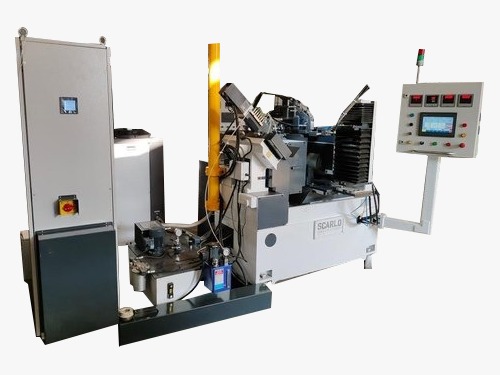
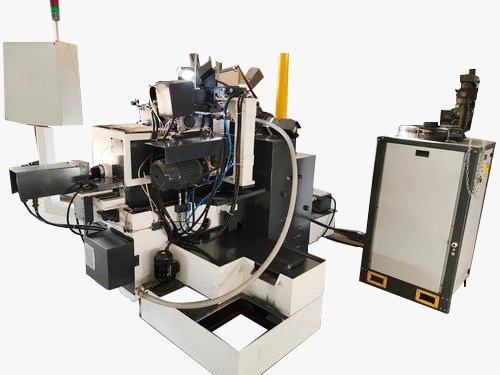
Centreless Grinding Machine for Precision Grinding

Centreless Grinding Machine
for Precision Grinding
Precision machining plays a vital role in modern manufacturing industries where dimensional accuracy, surface finish, and consistent production quality are essential. Components used in automotive systems, aerospace equipment, bearings, medical devices, and engineering assemblies must meet strict tolerance requirements. To achieve these standards efficiently, industries rely on specialized grinding equipment designed for precise surface finishing and reliable machining performance.
A centreless grinding machine for precision grinding is an advanced machining system used to remove material from the outer surface of cylindrical workpieces without requiring centers or chucking mechanisms. Unlike traditional cylindrical grinding machines, the centreless grinding method supports the workpiece between a grinding wheel and a regulating wheel while resting on a work blade. This unique configuration enables continuous grinding and significantly improves production efficiency.
Centreless grinding technology allows manufacturers to produce large quantities of precision components with consistent diameter, roundness, and surface finish. Since the workpiece does not need to be clamped or repositioned between cycles, the process reduces setup time and increases overall production throughput. These machines are widely used in industries where cylindrical components must meet strict dimensional and surface quality standards.
Understanding the Centreless Grinding Process
Centreless grinding is a precision machining method used to remove material from cylindrical components using a specialized grinding arrangement. Instead of holding the workpiece between centers, the component is positioned between two rotating wheels and supported by a work rest blade. This configuration allows the part to rotate freely while being ground to the required dimension.
The grinding wheel performs the primary material removal. It rotates at a high peripheral speed and carries out the cutting action on the workpiece surface. The regulating wheel controls the rotational speed of the workpiece and guides its movement through the grinding zone.
During operation, the workpiece rests on a work blade that maintains proper positioning throughout the grinding cycle. The regulating wheel is slightly inclined, allowing the workpiece to move axially through the grinding zone during through-feed grinding operations.
Because the process operates continuously, centreless grinding machines are highly efficient in high-volume manufacturing environments. They are capable of producing parts with excellent roundness, tight dimensional tolerances, and smooth surface finishes, making them suitable for critical engineering applications.
Key Components of a Centreless Grinding Machine
A centreless grinding machine consists of several precision-engineered components that work together to ensure stable grinding performance and accurate machining results. Each component contributes to controlling the grinding process and maintaining operational stability.
Grinding Wheel
The grinding wheel serves as the primary cutting tool in the machine. It rotates at high speed and removes material from the workpiece surface. These wheels are manufactured from abrasive materials designed to maintain cutting efficiency while producing fine surface finishes.
Regulating Wheel
The regulating wheel controls the rotational speed of the workpiece and regulates the feed rate during grinding operations. By adjusting the speed and angle of the regulating wheel, operators can precisely control the movement of the workpiece through the grinding zone.
Work Rest Blade
The work rest blade supports the workpiece during grinding and ensures correct alignment between the grinding wheel and regulating wheel. Accurate positioning of this component is essential for maintaining dimensional precision.
Spindle Assemblies
Spindle assemblies support both the grinding wheel and regulating wheel. High-quality spindle systems provide stability during high-speed grinding operations and help maintain consistent machining accuracy.
Lubrication and Cooling Systems
Lubrication and cooling systems are also essential elements of centreless grinding machines. These systems help maintain spindle temperature stability and reduce friction during grinding operations, extending machine life and ensuring consistent performance.
Types of Centreless Grinding Operations
Centreless grinding machines are capable of performing different types of grinding operations depending on production requirements and workpiece geometry. Each grinding method is suited to specific applications and component designs.
Through-Feed Grinding
Through-feed grinding is commonly used for long cylindrical components that require uniform diameter reduction along their entire length. In this process, the workpiece continuously passes through the grinding zone while the grinding wheel removes material from the outer surface.
In-Feed Grinding
In-feed grinding is used for components with complex shapes or shoulders that cannot pass entirely through the grinding zone. In this method, the workpiece remains stationary while the grinding wheel moves inward to remove material.
End-Feed Grinding
End-feed grinding is applied when grinding tapered components or parts with specific end geometries. The workpiece is fed into the grinding zone until it reaches a fixed stop, where the grinding operation is completed.
Each grinding method provides flexibility in machining different component types while maintaining precision and production efficiency.
Industrial Applications of Centreless Grinding Machines
Centreless grinding machines are widely used across multiple industries where cylindrical components require high dimensional accuracy and superior surface finish quality. These machines support both high-volume production and precision engineering operations.
Common industrial applications include:
- Automotive components such as shafts, pins, and transmission parts
- Bearing manufacturing where precise diameter control is required
- Hydraulic and pneumatic components used in industrial equipment
- Medical device components requiring smooth surface finishing
- Aerospace components requiring high tolerance machining
- Precision engineering parts used in industrial machinery
The versatility of centreless grinding technology allows manufacturers to process a wide range of materials, including steel, stainless steel, alloys, and specialized engineering metals.
Key Features of Modern Centreless Grinding Machines
Modern centreless grinding machines are designed with advanced mechanical systems and automation features that enhance machining accuracy, productivity, and operational reliability.
Key operational features include:
- 01High-speed grinding wheel systems for efficient material removal
- 02Precision regulating wheel controls for stable workpiece rotation
- 03Advanced spindle assemblies designed for vibration-free operation
- 04Automatic lubrication systems that reduce friction and extend machine life
- 05Cooling systems that maintain temperature stability during grinding
- 06Adjustable feed systems for accurate material removal control
These capabilities allow centreless grinding machines to maintain consistent grinding performance even during continuous production cycles.
Advantages of Using Centreless Grinding Technology
Centreless grinding technology offers several operational advantages compared to conventional grinding processes. These benefits make the process highly suitable for modern manufacturing environments where productivity and accuracy are equally important.
Key advantages include:
- Continuous grinding operation for high production efficiency
- Reduced setup time due to the absence of clamping mechanisms
- Capability to grind small diameter components with high accuracy
- Improved roundness and surface finish of cylindrical parts
- Ability to process large production volumes consistently
- Reduced operator intervention during production cycles
These advantages make centreless grinding machines an essential part of precision machining operations across various industries.
Maintenance and Operational Considerations
Proper maintenance and operational control are essential to ensure consistent grinding performance and long machine service life. Centreless grinding machines operate under high mechanical loads and rotational speeds, making routine inspection and servicing important for reliable performance.
Regular monitoring of spindle lubrication systems helps prevent overheating and maintain stable grinding conditions. Grinding wheels should also be dressed periodically to preserve their cutting efficiency and maintain the correct surface profile.
Coolant systems must be properly maintained to ensure adequate lubrication and heat removal during grinding operations. Maintaining correct coolant flow helps reduce grinding temperatures and prevents thermal damage to the workpiece surface.
Operators must also ensure proper alignment between the grinding wheel, regulating wheel, and work rest blade in order to maintain dimensional accuracy during grinding cycles.
Future Trends in Precision Grinding Technology
The demand for higher machining accuracy and improved manufacturing efficiency continues to drive advancements in grinding technology. Modern centreless grinding machines are increasingly integrating automation, digital monitoring systems, and CNC control technologies.
Advanced machine designs now incorporate servo-controlled infeed systems, automated wheel dressing mechanisms, and intelligent monitoring systems that help maintain consistent machining accuracy. These innovations allow manufacturers to achieve tighter tolerances while improving productivity and operational reliability.
With the continued growth of precision engineering industries such as aerospace, automotive manufacturing, and medical device production, centreless grinding machines are expected to remain an essential component of modern machining infrastructure.
Frequently Asked Questions
Get In Touch
Office Address
C1-1, G.I.D.C. Estate, Opp. Ambica Nagar, Road No13, Odhav, Ahmedabad-382415, Gujarat, India
View on Google Maps ?Filter Using Product Tags


