
Home Page Our Blog Total Peak Power Consumption (TPPC)
Contact us for help?

Contact with us through our representative or submit a business inquiry online.

Contact Us

Total Peak Power Consumption (TPPC)

Medical Oxygen Generator Plant

Total Peak Power Consumption — Guide, Formula & Industrial Best Practices

Total Peak Power Consumption (TPPC)


Introduction

Total Peak Power Consumption (TPPC) is the highest real power drawn by your plant, line, or building within a defined interval (often 15 or 30 minutes). Knowing your TPPC helps you size transformers, cables, UPS/DBs, and protection devices correctly, avoid utility demand penalties, and plan expansions without unexpected downtime or tripping.


Description

TPPC is not simply the sum of nameplate ratings. It reflects how many loads operate simultaneously, how motors start, the power factor (PF), diversity, and duty cycles. For three-phase systems, instantaneous real power can be approximated as P = ?3 × V × I × PF. For accurate TPPC, apply demand/diversity factors, include starting kVA of large motors/VFDs, and measure with a Class-A power analyzer or smart meter during the busiest shift.


Applications and Benefits

Applications Benefits
  • Greenfield plants for transformer, DG set, and LT panel sizing
  • Production lines (CNC, grinders, compressors, ovens, HVAC)
  • Data centers and labs for UPS and battery autonomy planning
  • Retrofits and expansions to verify spare capacity on busbars
  • Construction sites to select feeders, breakers, and PCC/MCC
  • Right-sized electrical infrastructure with fewer nuisance trips
  • Lower demand charges and improved power quality
  • Better budgeting of capex/opex and phased capacity additions
  • Higher equipment reliability and energy visibility
  • Compliance with safety margins for cables, breakers, and panels

Key Considerations for Calculating TPPC

  • List all connected loads with rated kW/kVA and operating schedule
  • Apply diversity and demand factors for non-simultaneous operations
  • Account for motor inrush/starting currents and soft starters/VFDs
  • Measure power factor; consider correction (APFC) to reduce kVA
  • Use logged data (15/30-min intervals) during peak shift and worst season

Where TPPC Matters Most

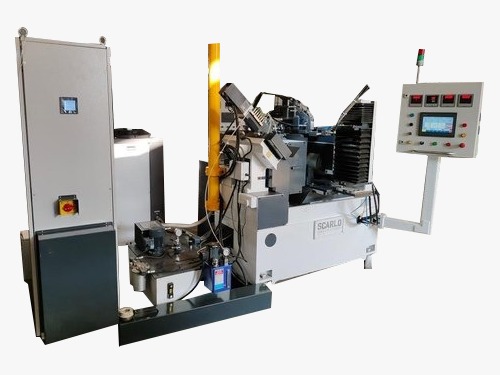
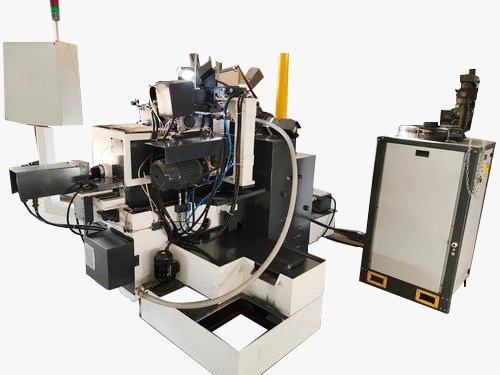
  • Machining & Grinding Lines: Multiple spindles, hydraulics, and coolant pumps starting together raise peak demand.
  • Process Industries: Heaters, blowers, and conveyors overlapping cycles increase instantaneous load.
  • Utilities & HVAC: Chillers/compressors create sharp peaks at start and seasonal extremes.

Why Choose Us?

At Scarlo Machines, we help customers estimate Total Peak Power Consumption for machine cells and grinding lines. Our engineering team reviews connected loads, operating patterns, and starting profiles to propose practical electrical sizing with safety margins—reducing trips, improving uptime, and ensuring smooth commissioning.


Uses & Importance

Calculating TPPC ensures adequate transformer capacity, correct breaker and cable ratings, optimized APFC sizing, and stable voltage during starts. It also prevents productivity loss from overload trips and avoids utility demand charges. A TPPC audit builds confidence when adding new equipment or shifting to higher takt times.


How to Do a Quick TPPC Estimate

1) Sum kW of loads expected to run simultaneously; 2) add starting allowance for large motors (typically 20–40% adder unless soft-started); 3) divide by PF to convert to kVA; 4) add a 10–20% engineering margin for future capacity. Validate later with logged data to fine-tune ratings.

FAQs

1. What is the difference between peak demand and average load?
Average load is energy used over time (kWh over hours). Peak demand (kW) is the highest short-interval draw, which drives transformer, UPS, and demand charges.
2. How do I include motor starting currents?
Add an inrush allowance or model starts. Soft starters/VFDs reduce inrush. For across-the-line starts, starting kVA can be 3–7× running current for a few seconds.
3. What if my power factor is low?
Low PF increases kVA and apparent peak. Use APFC to correct PF (e.g., 0.8?0.95) and reduce kVA, feeder size, and penalties.
4. How long should I log data to capture TPPC?
Log for at least one full production week across shifts and a high-load season. Use 15/30-minute demand intervals to match utility billing.
5. Is the nameplate total the same as TPPC?
No. Nameplates assume all loads at full power simultaneously; TPPC reflects actual simultaneity, diversity, starting, and PF.

Conclusion

Understanding and managing Total Peak Power Consumption enables right-sized, reliable, and cost-effective electrical systems. Whether you’re installing new grinding lines or expanding capacity, a TPPC review minimizes risk and maximizes uptime—today and as your plant grows.


Contact Details

Talk to our specialists today for tailored solutions and fast assistance.

Company:

Scarlo Machines

Phone:

+91 9825303532, +91 9099969410

WhatsApp: Chat on WhatsApp
Address:

C1-1, G.I.D.C. Estate, Opp. Ambica Nagar,Road No13, Odhav, Ahmedabad-382415, Gujarat, India


Filter Using Product Tags


Hydraulic Centerless Grinder Manufacturer| Hydraulic Centerless Grinder Supplier| Precision Hydraulic Centerless Grinder| CNC Hydraulic Centerless Grinder| Automatic Hydraulic Centerless Grinder| Industrial Hydraulic Centerless Grinder| High Precision Hydraulic Grinding Machine| Hydraulic Centerless Grinder Service| Affordable Hydraulic Centerless Grinder| Best Hydraulic Centerless Grinder| Precision Hydraulic Centerless Grinding Machine Supplier| Grinding Range| Maximum Length For Thru Feed Grinding| Maximum Length For Infeed Grinding| Grinding Wheel Size (Od X Wd X Id)| Regulating Wheel Size (Od X Wd X Id)| Grinding Wheel Peripheral Speed| Regulating Wheel Speed Range| Grinding Wheel Motor Power| Regulating Wheel Motor Power| Spindle Lubrication Pump Motor| Dresser Actuation Pump Motor| Slide Lubrication Motor| Coolant Pump Motor| Coolant Pump Displacement Capacity| Heat Exchanger Motor| Infeed Lower Slide Feed Graduation| Infeed Slide Servo Graduation| Ac Invertor For Grinding Whl Spindle| Ac Invertor For Regulating Whl Spindle| Regulating Wheel Tilt Angle| Regulating Wheel Dresser Diamond Offset Range| Grinding Wheel Diamond Advance| Grinding Wheel Diamond Advance – Servo| Infeed Servo Motor Ratings (Nm)| Dresser Servo Motor Ratings (Nm)| Total Peak Power Consumption| Total Machine Weight| Total Shipping Weight| Country Of Origin| Maximum Length For Infeed Grinding| Grinding Wheel Peripheral Speed| Regulating Wheel Speed Range| Regulating Wheel Motor Power| Grinding Wheel Motor Power 30hp / 40 Hp Opt| Regulating Wheel Motor Power| Spindle Lubrication Pump Motor| Grinding Wheel Spindle Lift Motor| Dresser Actuation Pump Motor| Slide Lubrication Motor| Coolant Pump Motor| Coolant Pump Displacement Capacity| Oil Chiller Unit Motor| Infeed Lower Slide Feed Graduation| Infeed Slide Servo Graduation| Ac Invertor For Grinding Whl Spindle| Ac Invertor For Regulating Whl Spindle| Regulating Wheel Tilt Angle| Regulating Wheel Dresser Diamond Offset Range| Infeed Servo Motor Ratings (Nm)| Dresser Servo Motor Ratings (Nm)| Total Peak Power Consumption| Machine Floor Size| Total Machine Weight| Total Shipping Weight|
quit