
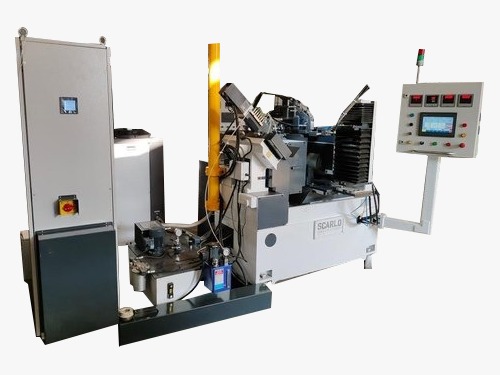
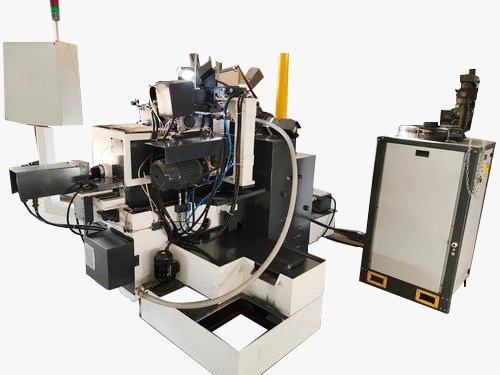
Home Page Our Blog Regulating Wheel Motor Power (Centerless Grinding)
Contact us for help?

Contact with us through our representative or submit a business inquiry online.

Contact Us

Regulating Wheel Motor Power (Centerless Grinding)

Medical Oxygen Generator Plant


Regulating Wheel Motor Power — Centerless Grinding Optimization | Scarlo Machines

Regulating Wheel Motor Power (Centerless Grinding)


Introduction

Regulating wheel motor power is a decisive parameter in centerless grinding. It governs part rotation, throughfeed speed, and the stability of the grinding gap. The right motor power prevents slippage, preserves geometry, and enables consistent stock removal across small pins to heavy shafts—directly influencing productivity, finish, and wheel life.


Description

In centerless grinding, the regulating (control) wheel imparts rotational force and feeds the workpiece. Motor power must balance torque demands at low RPM with fine speed control. Undersized motors cause chatter and taper; oversized motors waste energy and can mask setup errors. Scarlo Machines sizes and tunes regulating wheel drives to match work diameter, material hardness, required line speed, and friction conditions (coolant, dressing, and wheel spec) for stable, efficient grinding.


Applications and Benefits

Applications Benefits of Correct Motor Power
  • Throughfeed grinding of bars, pins, and fasteners in mass production
  • Infeed grinding of shoulders, steps, and profiles requiring fine control
  • Automotive shafts and valve train parts needing tight roundness
  • Bearing rollers and aerospace components with demanding finishes
  • Hard materials (alloy steel, Inconel) where torque at low RPM is critical
  • Stable part rotation with minimal slippage and improved roundness
  • Consistent throughfeed rate ? predictable cycle times
  • Lower vibration and chatter ? superior surface finish
  • Improved wheel life due to steady, controlled loading
  • Energy-efficient operation with adequate torque reserve

Key Engineering Considerations

  • Torque at Low RPM: Regulating wheels often run 10–300 RPM; high starting torque avoids stalls on heavy parts.
  • Power Sizing: Typical ranges 0.75–7.5 kW (1–10 HP) depending on work dia/length, material, and feed force.
  • Speed Control: Vector VFD/servo with closed-loop feedback gives precise RPM and soft starts.
  • Compliance & Grip: Wheel hardness and dressing angle impact friction; power must compensate for slip risk.
  • Thermal Stability: Overspec motors run cooler, protecting bearings and improving dimensional control.

Where Correct Motor Power Matters Most

  • Long, Slender Parts: Adequate torque prevents speed droop that causes lobing and bowing.
  • Hard/Coated Materials: Extra reserve overcomes higher rolling resistance at the nip.
  • Precision Infeed Jobs: Fine speed resolution improves spark-out and shoulder control.

Why Choose Us?

Since 1976, Scarlo Machines engineers regulating wheel drives that pair robust motors with high-resolution control and rigid mechanics. We simulate load, select optimal power, and validate on real parts—delivering quieter processes, faster setups, and dependable accuracy on shop floors across India.


Guidelines & Quick Selection Tips

Estimate torque from part weight, line contact friction, and target RPM; add 30–50% reserve for acceleration and transient loads. Prefer vector drives/servos for low-speed torque, and match motor frame to damping and thermal margins. Review dressing strategy and wheel grade—both change the friction and thus the power demand.


Manufacturer & Supplier Information

Scarlo Machines designs and builds centerless grinders with optimized regulating wheel motor power for automotive, bearing, and general engineering applications. We offer custom drive packages, VFD/servo options, and on-site process tuning. Explore solutions or contact us for a sizing recommendation based on your part family and takt time.

FAQs

1. How do I know if my regulating wheel motor is underpowered?
Typical signs include part slippage, inconsistent throughfeed rate, chatter marks, taper, and frequent speed droop under load. Temperature rise at the motor and drive overloads are additional indicators.
2. What motor power range is common for centerless machines?
Applications span roughly 0.75–7.5 kW (1–10 HP). Small pins/bar stock can run below 2 kW, while large diameters, hard alloys, or high-friction setups may require 5 kW or more.
3. VFD vs. servo for the regulating wheel—what’s better?
Vector VFDs offer excellent low-speed torque and are cost-effective. Servos add tighter speed regulation, dynamic response, and positioning—best for precision infeed and automation.
4. Does wheel hardness or dressing affect required motor power?
Yes. Softer wheels and certain dressing angles increase contact area and friction, raising torque demand. Always reassess motor reserve when changing wheel grade or dressing.
5. Can Scarlo help size the right motor for my parts?
Absolutely. Share part dimensions, material, cycle targets, and finish/roundness specs—we’ll recommend motor power, drive type, and setup parameters.

Conclusion

Getting regulating wheel motor power right is foundational to roundness, finish, and throughput. Scarlo Machines integrates correctly sized motors, precision drives, and proven mechanics to keep parts rotating steadily and cycles on target. Talk to our experts for a tailored recommendation.


Contact Details

Talk to our specialists today for tailored solutions and fast assistance.

Company:

Scarlo Machines

Phone:

+91 9825303532, +91 9099969410

WhatsApp: Chat on WhatsApp
Address:

C1-1, G.I.D.C. Estate, Opp. Ambica Nagar,Road No13, Odhav, Ahmedabad-382415, Gujarat, India


Filter Using Product Tags


Hydraulic Centerless Grinder Manufacturer| Hydraulic Centerless Grinder Supplier| Precision Hydraulic Centerless Grinder| CNC Hydraulic Centerless Grinder| Automatic Hydraulic Centerless Grinder| Industrial Hydraulic Centerless Grinder| High Precision Hydraulic Grinding Machine| Hydraulic Centerless Grinder Service| Affordable Hydraulic Centerless Grinder| Best Hydraulic Centerless Grinder| Precision Hydraulic Centerless Grinding Machine Supplier| Grinding Range| Maximum Length For Thru Feed Grinding| Maximum Length For Infeed Grinding| Grinding Wheel Size (Od X Wd X Id)| Regulating Wheel Size (Od X Wd X Id)| Grinding Wheel Peripheral Speed| Regulating Wheel Speed Range| Grinding Wheel Motor Power| Regulating Wheel Motor Power| Spindle Lubrication Pump Motor| Dresser Actuation Pump Motor| Slide Lubrication Motor| Coolant Pump Motor| Coolant Pump Displacement Capacity| Heat Exchanger Motor| Infeed Lower Slide Feed Graduation| Infeed Slide Servo Graduation| Ac Invertor For Grinding Whl Spindle| Ac Invertor For Regulating Whl Spindle| Regulating Wheel Tilt Angle| Regulating Wheel Dresser Diamond Offset Range| Grinding Wheel Diamond Advance| Grinding Wheel Diamond Advance – Servo| Infeed Servo Motor Ratings (Nm)| Dresser Servo Motor Ratings (Nm)| Total Peak Power Consumption| Total Machine Weight| Total Shipping Weight| Country Of Origin| Maximum Length For Infeed Grinding| Grinding Wheel Peripheral Speed| Regulating Wheel Speed Range| Regulating Wheel Motor Power| Grinding Wheel Motor Power 30hp / 40 Hp Opt| Regulating Wheel Motor Power| Spindle Lubrication Pump Motor| Grinding Wheel Spindle Lift Motor| Dresser Actuation Pump Motor| Slide Lubrication Motor| Coolant Pump Motor| Coolant Pump Displacement Capacity| Oil Chiller Unit Motor| Infeed Lower Slide Feed Graduation| Infeed Slide Servo Graduation| Ac Invertor For Grinding Whl Spindle| Ac Invertor For Regulating Whl Spindle| Regulating Wheel Tilt Angle| Regulating Wheel Dresser Diamond Offset Range| Infeed Servo Motor Ratings (Nm)| Dresser Servo Motor Ratings (Nm)| Total Peak Power Consumption| Machine Floor Size| Total Machine Weight| Total Shipping Weight|
quit