
Machine Floor Size: How to Plan Space for Industrial Equipment

Machine Floor Size: How to Plan Space for Industrial Equipment
Introduction
Planning the right machine floor size is crucial for safety, productivity, and future scalability. This guide explains how to calculate equipment footprint, service clearances, operator aisles, material flow corridors, and safety zones so your layout meets industrial best practices and statutory norms while maximizing throughput.
Description
Machine floor size is more than the physical footprint. You must add allowances for loading/unloading, maintenance access, coolant/utility routing, guarding, chip or scrap removal, and forklift or pallet movement. As a thumb rule, allocate 1.6–2.5× the machine’s base footprint to cover full working and service envelopes; high-automation cells may need more depending on conveyors and robots.
Applications and Benefits
| Applications | Benefits |
|---|---|
|
|
Key Factors When Calculating Floor Size
Checklist
- Machine footprint (L×W): base size including coolant tanks, chip conveyors, panels.
- Service clearances: doors, dresser/change areas, panel swing, filter removal, lifting paths.
- Operator zone: safe stance, HMI reach, tool trolley and gauge table space.
- Material flow: pallets, bins, cranes/hoists, roller conveyors, and turn radii for forklifts.
- Safety & egress: guard perimeters, fire aisle width, emergency access, light curtains.
- Utilities: cable tray, air/oil/coolant lines, drain trenches, mist collectors, UPS/DB panels.
- Overhead & height: crane hook height, enclosure opening, mezzanine conflicts.
- Future expansion: allowance for automation, in-process gauging, or second machine.
Typical Floor Size by Machine Type (Indicative)
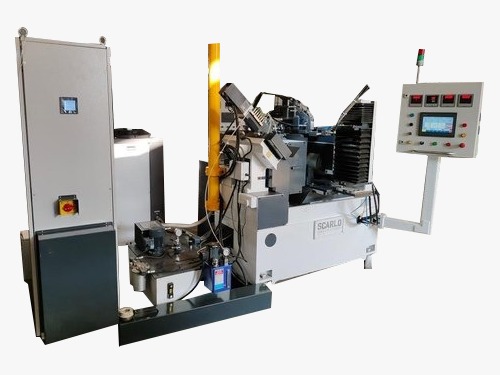
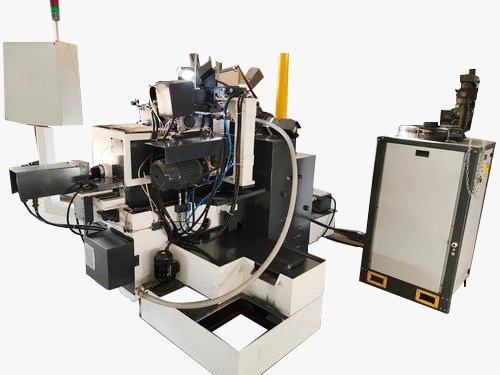
- Centerless Grinder: Footprint ~2.5×1.8 m; plan ~5.0×3.6 m including dresser, panels, and bin flow.
- CNC Turning Center: Footprint ~2.2×1.6 m; plan ~4.4×3.2 m with bar feeder and service space.
- CNC VMC: Footprint ~2.8×2.3 m; plan ~5.6×4.6 m for tool cabinet, chip removal, and crane access.
- Hydraulic Press: Footprint ~2.0×1.5 m; plan ~4.0×3.0 m plus guarding and loading area.
- Blister/Pouch Packing Line: Footprint ~4.0×1.2 m; plan ~7.0×3.0 m to include infeed/outfeed conveyors.
Why Correct Floor Sizing Matters
Right-sized layouts reduce non-value movement, improve OEE, and keep operators safe. Under-sized layouts lead to blocked aisles, difficult maintenance, poor 5S, and unplanned downtime. Use layout trials (cardboard engineering), digital twins, or simple scale drawings to validate reach, access, and flow before installation.
Quick Formula & Example
Recommended Area (m²) ? (Machine L × Machine W) × K, where K = 1.6 to 2.5 depending on automation and handling. For a grinder 2.5 m × 1.8 m with a chip conveyor and gauge table, choose K = 2.2 ? Area ? 2.5 × 1.8 × 2.2 ? 9.9 m². Convert to a rectangle (e.g., ~3.6 m × 2.8 m) aligned to aisles and utilities.
Manufacturer & Supplier Information
If you need precise machine floor size for a specific centerless grinding model, share your machine code, accessories, and handling method. Our team will provide a tailored layout with service envelopes, utility points, and safety buffers suitable for your shopfloor and compliance needs.
FAQs
Conclusion
Effective machine floor size planning blends footprint, service access, handling paths, and safety. Use the checklist and quick formula to estimate your area, then validate with a detailed layout to unlock safer operations and higher productivity.
Contact Details
Talk to our specialists today for tailored solutions and fast assistance.
+91 9825303532, +91 9099969410
C1-1, G.I.D.C. Estate, Opp. Ambica Nagar,Road No13, Odhav, Ahmedabad-382415, Gujarat, India
Filter Using Product Tags


