
Home Page Our Blog Grinding Wheel Peripheral Speed
Contact us for help?

Contact with us through our representative or submit a business inquiry online.

Contact Us

Grinding Wheel Peripheral Speed

Medical Oxygen Generator Plant


Blister Packing Machine in Gujarat

Grinding Wheel Peripheral Speed (Surface Speed) — Formula, Safety & Best Practices


Introduction

Grinding wheel peripheral speed (also called surface speed) is the linear speed at the wheel’s outer circumference. Getting it right is critical for accuracy, surface finish, wheel life, and operator safety. This guide explains the formula, typical ranges for different wheel types, and how to select and control speed on production machines.


Description

The peripheral speed V of a rotating wheel depends on wheel diameter D and spindle speed N. In SI units, V (m/s) = ? × D (m) × N (rpm) ÷ 60. You can also work in m/min using V (m/min) = ? × D (m) × N. Choosing the correct V prevents glazing, burn, chatter, and burst risk while enabling efficient stock removal and consistent finishes.


Applications and Benefits

Applications Benefits
  • External/cylindrical, surface, and centerless grinding of steels and alloys
  • Toolroom grinding for cutters, mandrels, punches, and gauges
  • High-speed production grinding with vitrified, resinoid, CBN, or diamond wheels
  • Automotive and bearing components requiring tight roundness and finish
  • Precision bar and tube finishing in centerless through-feed operations
  • Stable cutting action, lower thermal damage, and improved surface integrity
  • Higher material removal rates with reduced cycle time
  • Longer wheel life due to optimal chip formation and self-sharpening
  • Lower vibration and chatter for better roundness/size control
  • Safer operation with speeds within wheel and machine limits

Key Points When Setting Peripheral Speed

  • Formula: V (m/s) = ? × D (m) × N (rpm) ÷ 60. Rearranged: N (rpm) = 60 × V ÷ (? × D).
  • Typical ranges (guideline): Vitrified Al?O? 25–35 m/s; Resinoid 40–63 m/s; CBN/Diamond 50–80 m/s (special machines may run higher—always follow nameplate limits).
  • Diameter effect: As the wheel wears and D reduces, V drops at constant rpm—compensate by increasing rpm within safe limits.
  • Wheel specification: Bond type, grit, grade, and structure influence the best V; harder grades usually prefer slightly lower speeds.
  • Machine capability: Guarding, spindle power, bearings, balance quality, and dresser type determine safe maximums.
  • Balancing & truing: Correct balance and regular truing/dressing reduce vibration, enabling consistent results at target V.
  • Coolant: At higher V, ensure directed, flood-type coolant with adequate flow and filtration to avoid burn.

Where Peripheral Speed Optimization Is Used

  • Centerless Grinding: Through-feed bar/shaft finishing where speed harmony between grinding and regulating wheels is vital.
  • Surface & Cylindrical Grinding: Achieving target Ra and geometry on precision dies, rollers, pins, and bearing races.
  • Carbide & Hardened Steel Tools: Using CBN/diamond at higher speeds for aggressive yet cool cutting.

Why Choose Us?

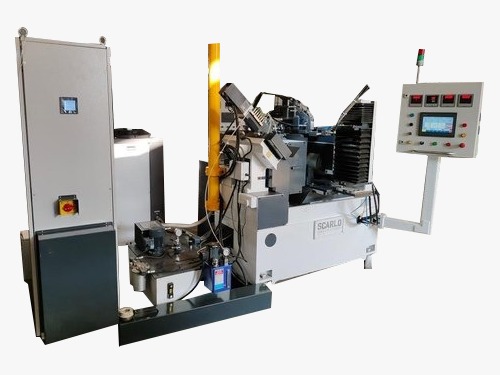
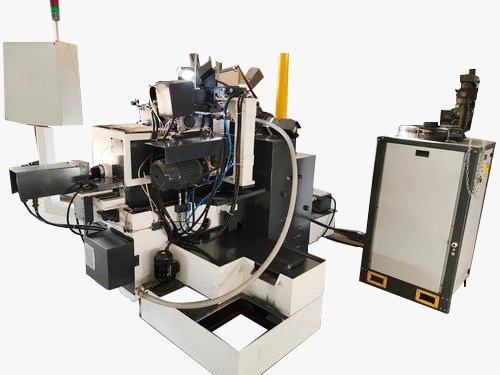
At Scarlo Machines, we engineer grinding solutions that run safely and efficiently at the correct peripheral speeds. Our rigid machine bases, precision spindles, and optimized dressing systems help you maintain target surface speed across the wheel life, improve part quality, and reduce overall grinding cost per component.


Uses & Importance

Correct peripheral speed prevents thermal damage and wheel failure, stabilizes chip formation, and boosts MRR without compromising finish. By matching speed to the wheel, material, and setup, manufacturers gain repeatable accuracy, longer wheel life, and predictable cycles—key to lean, high-throughput production.


Manufacturer & Supplier Information

Scarlo Machines supports customers with application engineering for selecting safe and effective grinding wheel peripheral speeds, rpm settings, and dresser parameters. Our teams help calculate rpm for any diameter, recommend ranges by wheel type, and validate performance on site for sustained, high-precision output.

FAQs

1. What is the formula for grinding wheel peripheral speed?
V (m/s) = ? × D (m) × N (rpm) ÷ 60. For rpm: N = 60 × V ÷ (? × D). Keep units consistent.
2. How do I convert from m/s to m/min?
Multiply m/s by 60 to get m/min. Example: 30 m/s equals 1800 m/min.
3. What happens if peripheral speed is too low or too high?
Too low: rubbing, glazing, poor finish, low MRR. Too high: burn risk, rapid wear, safety hazards if beyond wheel/machine limits.
4. Do I need to change rpm as the wheel wears?
Yes. Diameter reduces over time, lowering V at constant rpm. Increase rpm carefully (within machine and wheel limits) to maintain the target V.
5. What are common safe ranges for wheel types?
Guidelines: Vitrified Al?O? 25–35 m/s; Resinoid 40–63 m/s; CBN/Diamond 50–80 m/s. Always follow the wheel label and machine nameplate.

Conclusion

Optimizing grinding wheel peripheral speed is the fastest way to improve finish, geometry, and throughput while protecting operators and equipment. For selection help, rpm calculations, and on-machine validation, partner with Scarlo Machines.


Contact Details

Talk to our specialists today for tailored solutions and fast assistance.

Company:

Scarlo Machines

Phone:

+91 9825303532, +91 9099969410

WhatsApp: Chat on WhatsApp
Address:

C1-1, G.I.D.C. Estate, Opp. Ambica Nagar,Road No13, Odhav, Ahmedabad-382415, Gujarat, India


Filter Using Product Tags


Hydraulic Centerless Grinder Manufacturer| Hydraulic Centerless Grinder Supplier| Precision Hydraulic Centerless Grinder| CNC Hydraulic Centerless Grinder| Automatic Hydraulic Centerless Grinder| Industrial Hydraulic Centerless Grinder| High Precision Hydraulic Grinding Machine| Hydraulic Centerless Grinder Service| Affordable Hydraulic Centerless Grinder| Best Hydraulic Centerless Grinder| Precision Hydraulic Centerless Grinding Machine Supplier| Grinding Range| Maximum Length For Thru Feed Grinding| Maximum Length For Infeed Grinding| Grinding Wheel Size (Od X Wd X Id)| Regulating Wheel Size (Od X Wd X Id)| Grinding Wheel Peripheral Speed| Regulating Wheel Speed Range| Grinding Wheel Motor Power| Regulating Wheel Motor Power| Spindle Lubrication Pump Motor| Dresser Actuation Pump Motor| Slide Lubrication Motor| Coolant Pump Motor| Coolant Pump Displacement Capacity| Heat Exchanger Motor| Infeed Lower Slide Feed Graduation| Infeed Slide Servo Graduation| Ac Invertor For Grinding Whl Spindle| Ac Invertor For Regulating Whl Spindle| Regulating Wheel Tilt Angle| Regulating Wheel Dresser Diamond Offset Range| Grinding Wheel Diamond Advance| Grinding Wheel Diamond Advance – Servo| Infeed Servo Motor Ratings (Nm)| Dresser Servo Motor Ratings (Nm)| Total Peak Power Consumption| Total Machine Weight| Total Shipping Weight| Country Of Origin| Maximum Length For Infeed Grinding| Grinding Wheel Peripheral Speed| Regulating Wheel Speed Range| Regulating Wheel Motor Power| Grinding Wheel Motor Power 30hp / 40 Hp Opt| Regulating Wheel Motor Power| Spindle Lubrication Pump Motor| Grinding Wheel Spindle Lift Motor| Dresser Actuation Pump Motor| Slide Lubrication Motor| Coolant Pump Motor| Coolant Pump Displacement Capacity| Oil Chiller Unit Motor| Infeed Lower Slide Feed Graduation| Infeed Slide Servo Graduation| Ac Invertor For Grinding Whl Spindle| Ac Invertor For Regulating Whl Spindle| Regulating Wheel Tilt Angle| Regulating Wheel Dresser Diamond Offset Range| Infeed Servo Motor Ratings (Nm)| Dresser Servo Motor Ratings (Nm)| Total Peak Power Consumption| Machine Floor Size| Total Machine Weight| Total Shipping Weight|
quit