
Home Page Our Blog Regulating Wheel Motor Power

Contact us for help?

Contact with us through our representative or submit a business inquiry online.

Contact Us

Regulating Wheel Motor Power

Medical Oxygen Generator Plant

Regulating Wheel Motor Power — Centerless Grinding Guide

Regulating Wheel Motor Power


Introduction

Regulating wheel motor power directly governs the feed, rotation, and stability of the workpiece in centerless grinding. Correct sizing improves roundness, surface finish, cycle time, and process reliability. This page explains how to select and optimize motor power for your regulating wheel across diverse materials and throughput targets.


Description

The regulating wheel controls workpiece speed and axial feed against the grinding wheel. Adequate motor power ensures torque at low RPM, steady traction under heavy stock removal, and fast recovery from load spikes. Modern drives use variable-frequency inverters, closed-loop feedback, and high-torque motors to maintain set surface speed and prevent chatter, burn, and size drift.


Applications and Benefits

Applications Benefits
  • Through-feed grinding of bars, pins, and shafts requiring controlled workpiece velocity
  • Infeed grinding of shoulders and profiles where torque at low speed is critical
  • Hard materials and larger diameters that impose higher traction load on the wheel
  • High-throughput automotive and bearing lines with strict Cp/Cpk demands
  • Precision engineering parts needing repeatable size and finish across long runs
  • Stable workpiece rotation for superior roundness and surface finish
  • Reduced size variation from consistent linear feed and speed control
  • Faster cycle times with confident acceleration and recovery under load
  • Lower risk of chatter, wheel glazing, or burn caused by speed sag
  • Energy-efficient operation using right-sized motors with VFD tuning

Key Factors for Selecting Motor Power

  • Workpiece envelope: diameter, length, and mass define traction and inertial load.
  • Material and removal rate: harder alloys and higher stock removal demand higher torque.
  • Process type: through-feed often needs steady torque; infeed needs strong low-speed torque.
  • Regulating wheel width and friction: contact area and dressing condition affect drive load.
  • Target surface speed: maintain set RPM across the production window without speed droop.
  • Control system: VFD with vector control, encoder feedback, and soft start for smooth launch.
  • Duty cycle and ambient: select continuous-duty rating with thermal margin for shop conditions.

Typical Power Ranges and Use Cases

  • Light/precision parts, small diameters, modest removal: 2–7.5 kW class for high control at low speeds
  • General shafts, pins, and bars in medium removal: 7.5–15 kW class for balanced torque and efficiency
  • Heavy-duty bars, hard alloys, aggressive removal: 15–30 kW class to prevent speed sag and chatter

Why Choose Us?

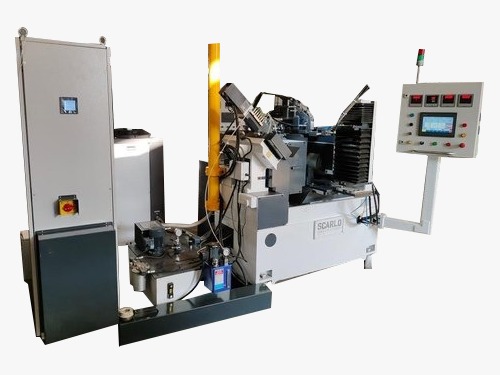
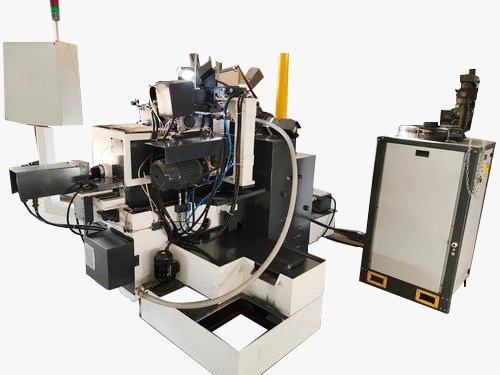
Scarlo Machines helps you size and tune regulating wheel motor power for your exact part mix, cycle time, and quality targets. With robust mechanics, advanced drives, and proven application support, we deliver steady workpiece control, faster setups, and reliable capability indices across shifts.


Setup Tips and Importance

Match wheel speed to grinding parameters, verify traction with dressed wheel texture, and log actual load on the drive. Use vector-control VFDs with ramp profiles, torque limits, and closed-loop feedback. Periodically dress the regulating wheel, align workrest geometry, and validate speed using tachometers to maintain process capability.


Manufacturer & Supplier Information

Scarlo Machines supplies centerless grinders with optimized regulating wheel drives, application engineering, and lifecycle support. From selection to commissioning, we help establish stable speeds, repeatable feeds, and durable hardware for consistent size and finish in demanding production lines.

FAQs

1. How do I estimate the motor power needed for my regulating wheel?
Start from worst-case parts: largest diameter, highest removal, and lowest speed. Calculate traction and inertial load, add a safety margin for thermal and startup peaks, and validate with measured drive load during trials.
2. Does higher power always improve finish?
Not necessarily. Power must be matched to torque control and wheel condition. Proper VFD tuning, wheel dressing, and support geometry have more impact on finish than oversizing alone.
3. What role does a VFD play for the regulating wheel?
A vector-control VFD maintains set speed under load, manages acceleration ramps, limits torque spikes, and enables closed-loop feedback with encoders for high repeatability.
4. When should I consider upgrading motor power?
If you observe speed droop, chatter under load, frequent stalls, or inability to meet cycle time on heavy parts, a higher-torque motor and drive upgrade may be justified.
5. Are 30 HP or 40 HP options suitable for heavy bars?
For aggressive removal on large diameters and hard materials, 30–40 HP class drives can provide the torque margin to avoid speed sag and maintain finish.

Conclusion

Right-sized regulating wheel motor power is essential for stable rotation, repeatable size, and premium surface finish. Partner with Scarlo Machines to define power, controls, and setup practices that keep your process fast, capable, and consistent.


Contact Details

Talk to our specialists today for tailored solutions and fast assistance.

Company:

Scarlo Machines

```
Phone:

+91 9825303532, +91 9099969410

WhatsApp: Chat on WhatsApp
Address:

C1-1, G.I.D.C. Estate, Opp. Ambica Nagar,Road No13, Odhav, Ahmedabad-382415, Gujarat, India

```

Filter Using Product Tags


Hydraulic Centerless Grinder Manufacturer| Hydraulic Centerless Grinder Supplier| Precision Hydraulic Centerless Grinder| CNC Hydraulic Centerless Grinder| Automatic Hydraulic Centerless Grinder| Industrial Hydraulic Centerless Grinder| High Precision Hydraulic Grinding Machine| Hydraulic Centerless Grinder Service| Affordable Hydraulic Centerless Grinder| Best Hydraulic Centerless Grinder| Precision Hydraulic Centerless Grinding Machine Supplier| Grinding Range| Maximum Length For Thru Feed Grinding| Maximum Length For Infeed Grinding| Grinding Wheel Size (Od X Wd X Id)| Regulating Wheel Size (Od X Wd X Id)| Grinding Wheel Peripheral Speed| Regulating Wheel Speed Range| Grinding Wheel Motor Power| Regulating Wheel Motor Power| Spindle Lubrication Pump Motor| Dresser Actuation Pump Motor| Slide Lubrication Motor| Coolant Pump Motor| Coolant Pump Displacement Capacity| Heat Exchanger Motor| Infeed Lower Slide Feed Graduation| Infeed Slide Servo Graduation| Ac Invertor For Grinding Whl Spindle| Ac Invertor For Regulating Whl Spindle| Regulating Wheel Tilt Angle| Regulating Wheel Dresser Diamond Offset Range| Grinding Wheel Diamond Advance| Grinding Wheel Diamond Advance – Servo| Infeed Servo Motor Ratings (Nm)| Dresser Servo Motor Ratings (Nm)| Total Peak Power Consumption| Total Machine Weight| Total Shipping Weight| Country Of Origin| Maximum Length For Infeed Grinding| Grinding Wheel Peripheral Speed| Regulating Wheel Speed Range| Regulating Wheel Motor Power| Grinding Wheel Motor Power 30hp / 40 Hp Opt| Regulating Wheel Motor Power| Spindle Lubrication Pump Motor| Grinding Wheel Spindle Lift Motor| Dresser Actuation Pump Motor| Slide Lubrication Motor| Coolant Pump Motor| Coolant Pump Displacement Capacity| Oil Chiller Unit Motor| Infeed Lower Slide Feed Graduation| Infeed Slide Servo Graduation| Ac Invertor For Grinding Whl Spindle| Ac Invertor For Regulating Whl Spindle| Regulating Wheel Tilt Angle| Regulating Wheel Dresser Diamond Offset Range| Infeed Servo Motor Ratings (Nm)| Dresser Servo Motor Ratings (Nm)| Total Peak Power Consumption| Machine Floor Size| Total Machine Weight| Total Shipping Weight|
quit