
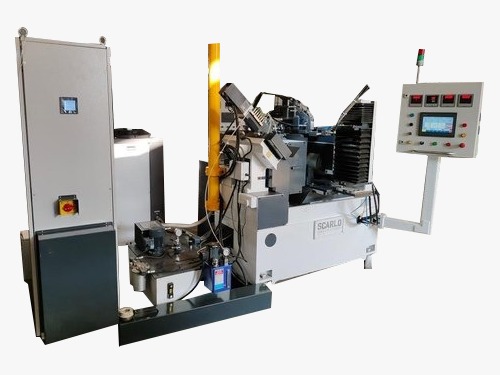
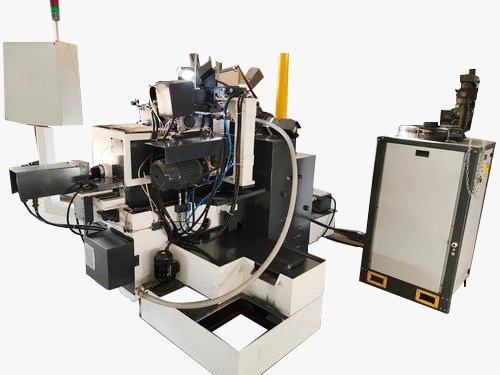
High Accuracy Centreless Grinding Machine System

High Accuracy Centreless Grinding Machine System
Precision machining plays a vital role in modern manufacturing, where dimensional accuracy, surface finish, and production consistency directly influence product quality. In industries such as automotive, aerospace, medical equipment, and general engineering, cylindrical components must meet strict tolerance requirements to ensure proper performance and long-term reliability. Achieving this level of precision requires specialized grinding equipment designed specifically for continuous and high-accuracy machining operations.
A High Accuracy Centreless Grinding Machine System is engineered to grind cylindrical components without requiring the workpiece to be held between centers. Instead, the workpiece is supported on a work blade and rotated between a grinding wheel and a regulating wheel. This configuration allows efficient material removal while maintaining excellent dimensional accuracy and a smooth surface finish.
Modern centreless grinding technology enables manufacturers to process large volumes of cylindrical parts while maintaining consistent product quality. With advanced spindle systems, automatic lubrication, precision control mechanisms, and rigid machine structures, these grinding systems support reliable and efficient production environments.
Understanding the Centreless Grinding Process
Centreless grinding differs significantly from conventional cylindrical grinding methods. In traditional grinding systems, workpieces are held between centers or chucks, which requires careful alignment and longer setup times. Centreless grinding removes this requirement, allowing faster setup and continuous production.
In a centreless grinding system, the workpiece rests on a support blade positioned between two rotating wheels. The grinding wheel performs the material removal, while the regulating wheel controls the rotational speed and feed rate of the workpiece. This arrangement ensures stable and controlled grinding operations.
The process is widely used for cylindrical components such as shafts, pins, rollers, bushings, and other precision mechanical parts. Because the workpiece is not clamped or centered, the grinding process can achieve high productivity while maintaining excellent dimensional control.
Key Working Principle of Centreless Grinding Systems
The centreless grinding system operates through coordinated movement between the grinding wheel, regulating wheel, and work support blade. The grinding wheel removes material from the surface of the rotating workpiece, while the regulating wheel manages the rotational speed and positioning of the workpiece.
Material enters the grinding zone where controlled pressure and rotation ensure gradual and precise material removal. During operation, coolant systems help maintain temperature stability and improve surface finish while protecting both the grinding wheel and the workpiece from excessive heat.
The result is a stable grinding process capable of producing high-precision cylindrical components with excellent roundness, dimensional consistency, and a refined surface finish.
Important Technical Capabilities of High Accuracy Centreless Grinding Machines
Industrial centreless grinding machines are designed with precise mechanical systems and advanced engineering features that support stable and reliable performance in demanding machining environments. A typical high accuracy centreless grinding machine system includes the following technical characteristics:
- Grinding range suitable for various cylindrical components
- Large grinding wheel size for efficient material removal
- Controlled regulating wheel speed for precise workpiece rotation
- High-power grinding wheel motor for continuous machining
- Advanced lubrication systems for spindle protection
- Coolant systems designed to maintain grinding temperature stability
- Precision feed mechanisms for accurate infeed grinding operations
These capabilities allow centreless grinding machines to perform consistent machining operations while supporting high productivity in industrial manufacturing processes.
Structural Design of High Accuracy Centreless Grinding Machine Systems
The mechanical design of a centreless grinding machine plays a major role in maintaining accuracy and stability during machining operations. Machines constructed with a rigid base structure help absorb vibrations and maintain alignment during high-speed grinding.
A single-piece machine base casting typically supports the grinding wheel spindle assembly, providing strong structural rigidity and stability. Hydrodynamic bearing systems are often used to support the grinding wheel spindle, ensuring smooth rotation with minimal vibration.
Advanced regulating wheel assemblies are designed with variable speed control systems that allow operators to adjust the workpiece rotation speed according to grinding requirements. Precision ground ball screws and servo-controlled movements further enhance accuracy during infeed operations.
Automatic lubrication systems ensure smooth movement of sliding components and protect machine assemblies from excessive wear. In addition, temperature monitoring systems help prevent spindle overheating and maintain machine stability during extended production cycles.
Applications of Centreless Grinding Machines in Industrial Manufacturing
Centreless grinding machines are widely used in industries where cylindrical components must meet strict dimensional tolerances and surface finish requirements. Their ability to grind components without complex workholding systems makes them highly suitable for large-scale manufacturing environments.
These machines are commonly used for grinding components such as:
- Automotive shafts and transmission components
- Industrial rollers and bearing components
- Hydraulic and pneumatic system parts
- Medical instrument shafts and surgical components
- Precision pins, bushings, and fasteners
- Engineering components used in mechanical assemblies
The versatility of centreless grinding systems allows them to process components of different sizes and materials while maintaining consistent production quality.
Advantages of High Accuracy Centreless Grinding Technology
Centreless grinding machines offer several operational advantages compared to conventional grinding methods. These systems are designed to improve productivity while maintaining the strict accuracy standards required in precision engineering.
Some of the key benefits of centreless grinding systems include:
- High production efficiency for cylindrical components
- Excellent dimensional accuracy and roundness
- Reduced setup time compared to traditional grinding systems
- Continuous production capability for mass manufacturing
- Improved surface finish for precision engineering applications
- Stable grinding performance during extended production cycles
These advantages make centreless grinding systems a reliable solution for industries that require consistent machining performance and high production output.
Precision Control and Automation in Modern Grinding Systems
Modern centreless grinding machines incorporate advanced automation features that enhance machining accuracy and operational reliability. CNC and PLC control systems allow operators to manage grinding parameters with high precision.
Servo-controlled feed mechanisms ensure accurate infeed movement during plunge grinding operations. Precision ball screw assemblies provide smooth motion control while minimizing mechanical backlash.
Automatic wheel dressing systems maintain the geometry of the grinding wheel and help ensure consistent grinding performance over extended production runs. In addition, automated coolant filtration and lubrication systems assist in maintaining optimal machine conditions.
These automation capabilities allow manufacturers to achieve consistent production results while reducing manual intervention and improving operational efficiency.
Maintenance and Operational Reliability
Maintaining the performance of centreless grinding machines requires proper lubrication, cooling, and routine machine inspection. Continuous lubrication systems protect spindle assemblies and sliding components from excessive wear during operation.
Coolant systems help maintain temperature stability and remove grinding debris from the machining zone. This improves grinding efficiency while protecting both machine components and grinding wheels.
Regular monitoring of spindle temperatures, lubrication systems, and grinding wheel condition helps ensure stable machine operation and long-term reliability. Proper maintenance practices also support consistent machining accuracy and reduce the risk of unplanned downtime.
Role of Centreless Grinding Machines in Precision Manufacturing
Precision manufacturing industries depend on accurate machining technologies capable of maintaining tight tolerances and consistent product quality. Centreless grinding machines support these requirements by enabling high-precision machining of cylindrical components across multiple industrial sectors.
Their ability to perform high-volume grinding operations with consistent dimensional control makes them essential equipment in modern production environments. With advancements in automation, structural rigidity, and spindle technology, centreless grinding systems continue to play an important role in precision engineering.
As manufacturing industries move toward higher productivity and stricter quality standards, centreless grinding machines remain a dependable solution for producing precision cylindrical components efficiently and consistently.
Frequently Asked Questions
A centreless grinding machine is used for grinding cylindrical components without requiring the workpiece to be held between centers or chucks. This process enables precise grinding of shafts, pins, rollers, and other cylindrical parts with high accuracy and excellent surface finish.
A centreless grinding machine operates using a grinding wheel, a regulating wheel, and a work support blade. The grinding wheel removes material from the surface of the workpiece, while the regulating wheel controls its rotational speed and feed rate during the grinding process.
Centreless grinding machines are commonly used to process cylindrical components such as shafts, bushings, pins, rollers, and other mechanical parts used in automotive, engineering, and manufacturing industries.
Centreless grinding enables continuous grinding without requiring complex workholding systems. This allows faster setup and consistent production of large volumes of cylindrical components while maintaining high dimensional accuracy.
Industries such as automotive manufacturing, aerospace engineering, medical equipment production, hydraulic component manufacturing, and general engineering widely use centreless grinding machines for precision cylindrical grinding operations.
Automation technologies such as CNC controls, servo-driven feed systems, and automatic wheel dressing improve grinding accuracy, maintain consistent machining conditions, and reduce manual adjustments during production.
Regular lubrication, coolant system monitoring, grinding wheel maintenance, and periodic inspection of machine components help maintain grinding accuracy and ensure long-term operational reliability of centreless grinding machines.
Get in Touch
Office Address Scarlo Machines, C1-1, G.I.D.C. Estate, Opp. Ambica Nagar, Road No. 13, Odhav, Ahmedabad — 382415, Gujarat, India Email info@scarlogrinders.com Phone +91 98253 03532 | +91 90999 69410Filter Using Product Tags


